B) False
Correct Answer

verified
Correct Answer
verified
B) False
Correct Answer
verified
Correct Answer
verified
A) demand divided by the percentage change in the price of the product.
B) demand divided by the percentage change in the price of different products.
C) quantity demanded divided by the absolute price of the product.
D) quantity demanded of a product divided by the percentage change in income.
E) income divided by the percentage change in quantity demanded.
G) A) and E)
Correct Answer
verified
Correct Answer
verified
Correct Answer
verified
(A) Necessity
(B) I...View Answer
Correct Answer
verified
(B) I...
View Answer
Correct Answer
verified
0.25/.8 = ...View Answer
Correct Answer
verified
View Answer
B) False
Correct Answer
verified
Correct Answer
verified
A) both inferior goods.
B) both luxury goods.
C) complements.
D) substitutes.
E) necessities.
G) B) and C)
Correct Answer
verified
Correct Answer
verified
A) inelastic.
B) elastic.
C) unit elastic.
D) perfectly inelastic.
E) perfectly elastic.
G) A) and E)
Correct Answer
verified
Correct Answer
verified
A) price floor.
B) price ceiling.
C) market equilibrium.
D) restriction on quantity.
E) price elasticity.
G) A) and C)
Correct Answer
verified
Correct Answer
verified
A) Excess supply of a good
B) A persistent shortage
C) A market price higher than equilibrium
D) The quantity supplied exceeds the quantity demanded.
E) Resources are diverted away from other activities to deal with the extra output.
G) A) and D)
Correct Answer
verified
Correct Answer
verified
A) relatively elastic.
B) perfectly inelastic.
C) unit elastic.
D) infinitely elastic.
E) cross-elastic.
G) A) and B)
Correct Answer
verified
Correct Answer
verified
A) price floor.
B) price ceiling.
C) market equilibrium.
D) restriction on quantity.
E) price elasticity.
G) A) and B)
Correct Answer
verified
Correct Answer
verified
Correct Answer
verified
Correct Answer
verified
A) perfectly elastic.
B) unit elastic.
C) zero.
D) perfectly inelastic.
E) infinity.
G) None of the above
Correct Answer
verified
Correct Answer
verified
A) an equilibrium in the gasoline market.
B) a surplus in the gasoline market.
C) a shortage in the gasoline market.
D) high profits for sellers.
E) a sudden increase in the gasoline supply.
G) A) and B)
Correct Answer
verified
Correct Answer
verified
A) Slope and elasticity measure the same things.
B) Price elasticity of demand varies depending on how price and quantity are measured.
C) It is important to know whether the price elasticity of demand is a positive or negative number.
D) The slope of a demand curve does not tell us the price elasticity of demand.
E) Price elasticity is the same everywhere along a demand curve of any shape.
G) None of the above
Correct Answer
verified
Correct Answer
verified
A) 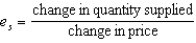
B) 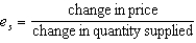
C) 
D) 
E) 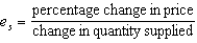
G) B) and D)
Correct Answer
verified
Correct Answer
verified
A) unit elastic.
B) relatively inelastic.
C) relatively elastic.
D) perfectly inelastic.
E) perfectly elastic.
G) A) and B)
Correct Answer
verified
Correct Answer
verified
A) percentage change in the quantity demanded divided by the percentage change in income.
B) percentage change in the price divided by the percentage change in the quantity demanded.
C) percentage change in the quantity demanded divided by the percentage change in the price.
D) percentage change in supply divided by the percentage change in demand.
E) absolute change in the quantity demanded divided by the absolute change in the price.
G) A) and B)
Correct Answer
verified
Correct Answer
verified
B) False
Correct Answer
verified
Correct Answer
verified
Showing 61 - 80 of 181
Related Exams