A) nuclear fission.
B) mitosis.
C) meiosis.
D) fertilization.
E) binary fission.
G) None of the above
Correct Answer

verified
Correct Answer
verified
A) are woody.
B) have macrophylls.
C) have pollen.
D) have sporophylls.
E) have spores.
G) C) and E)
Correct Answer
verified
Correct Answer
verified
A) a mature ovary.
B) a thickened style.
C) an enlarged ovule.
D) a modified root.
E) a mature female gametophyte.
G) A) and E)
Correct Answer
verified
Correct Answer
verified
A) The pollen grains will be pure red.
B) The pollen grains will be pure blue.
C) The pollen grains will have red interiors and blue exteriors.
D) The pollen grains will have blue interiors and red exteriors.
E) Insofar as the pollen grains are independent of the plant that produced them, they will not absorb either stain.
G) A) and C)
Correct Answer
verified
Correct Answer
verified
A) 1 → 2 → 3
B) 2 → 3 → 1
C) 2 → 1 → 3
D) 3 → 2 → 1
E) 3 → 1 → 2
G) A) and E)
Correct Answer
verified
Correct Answer
verified
A) 
B) 
C) 
D) 
F) A) and B)
Correct Answer
verified
Correct Answer
verified
A) only one sperm nucleus
B) two sperm nuclei
C) the pollen tube
D) Two of the responses above are correct.
F) All of the above
Correct Answer
verified
Correct Answer
verified
A) 1 only
B) 1 and 2
C) 1, 2, and 3
D) 1, 2, 3, and 4
E) 2, 3, 4, and 5
G) A) and C)
Correct Answer
verified
Correct Answer
verified
A) sporopollenin
B) lignin present in cell walls
C) pollen
D) use of air currents as a dispersal agent
E) megaphylls
G) B) and C)
Correct Answer
verified
Correct Answer
verified
A) harpy eagles.
B) later generations of humans.
C) agoutis.
D) orchid bees.
E) sloths.
G) B) and D)
Correct Answer
verified
Correct Answer
verified
A) Cones are homologous to the capsules of moss plants.
B) The pine tree is a gametophyte.
C) Male and female gametophytes are in close proximity during gamete synthesis.
D) Conifer pollen grains contain male gametophytes.
E) Double fertilization is a relatively common phenomenon.
G) A) and C)
Correct Answer
verified
Correct Answer
verified
A) insects
B) grazing and browsing by animals
C) pathogenic fungi
D) competition with other plants
E) human population growth
G) A) and D)
Correct Answer
verified
Correct Answer
verified
A) a different type of sporopollenin
B) an internal reservoir of liquid water
C) integument(s)
D) ability to be dispersed
E) waxy cuticle
G) B) and C)
Correct Answer
verified
Correct Answer
verified
A) 4
B) 8
C) 16
D) 24
E) 32
G) A) and E)
Correct Answer
verified
Correct Answer
verified
A) 1
B) 3
C) 5
D) 7
E) 11
G) A) and D)
Correct Answer
verified
Correct Answer
verified
A) male gametophyte
B) female gametophyte
C) male sporophyte
D) female sporophyte
F) A) and D)
Correct Answer
verified
Correct Answer
verified
A) 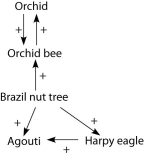
B) 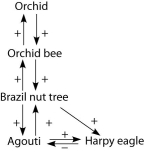
C) 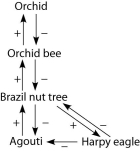
D) 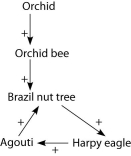
F) All of the above
Correct Answer
verified
Correct Answer
verified
A) ovules-waxy cuticle
B) ovaries-filaments
C) fruits-stamens
D) pollen grains-waxy cuticle
E) integuments-sporopollenin
G) All of the above
Correct Answer
verified
Correct Answer
verified
A) cell wall components, such as lignins and pectins.
B) secondary metabolites.
C) accessory photosynthetic pigments.
D) sporopollenin.
E) the wax of cuticles.
G) A) and B)
Correct Answer
verified
Correct Answer
verified
A) genetic engineering
B) artificial selection
C) natural selection
D) sexual selection
E) pesticide and herbicide application
G) B) and C)
Correct Answer
verified
Correct Answer
verified
Showing 21 - 40 of 102
Related Exams